Published
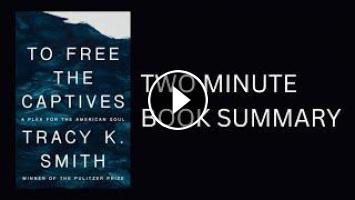
Free Amazon Audible for 1 Month: https://amzn.to/49YcVdI - You can listen to this book and thousands of other titles. Free 30-day trial. Cancel anytime. (They pay you a small commission even though you don't subscribe to a paid version. Win-win!) 2-minute summary of the book To Free the Captives by Tracy K. Smith.
"To Free the Captives" by Tracy K. Smith is a thought-provoking book that dives deep into themes of freedom, bondage, and the journey towards understanding and liberation. Tracy K. Smith, renowned for her poetic prowess, brings a unique narrative style that blends poetry, personal reflection, and historical inquiry to explore these complex themes. The book takes the reader on a journey that spans past and present, weaving together stories of individuals and communities striving for freedom.
At the heart of the book is the concept of captivity, both literal and metaphorical. Smith draws on historical examples, such as the enslavement of African Americans and the imprisonment of political dissidents, to illustrate the many forms of physical bondage. However, she also delves into the less tangible forms of captivity that bind individuals and societies: the captivity of mindsets, beliefs, and systems that limit freedom and perpetuate inequality.
Smith's narrative is deeply personal, reflecting on her own experiences and the lessons she has learned about freedom and captivity. She shares stories from her life and her family's history, connecting these personal tales with broader social and historical contexts. This approach makes the book not only a scholarly exploration of freedom and captivity but also a deeply human story that resonates on a personal level.
One of the book's strengths is its ability to connect the past with the present, showing how the legacies of historical injustices continue to impact contemporary society. Smith argues that understanding and acknowledging these connections is crucial for any genuine effort to free the captives of today. She highlights the importance of memory, storytelling, and art as tools for resistance and liberation, showcasing how creative expression can challenge oppressive systems and inspire change.
"To Free the Captives" also grapples with the concept of inner freedom, exploring how individuals can liberate themselves from the internalized forms of oppression that shape their identities and relationships. Smith suggests that true freedom involves not only the removal of external constraints but also the inner work of healing, self-discovery, and transformation.
Throughout the book, Smith's writing is lyrical and evocative, blending the precision of poetry with the depth of philosophical inquiry. She invites the reader to reflect on their own understanding of freedom and captivity, challenging them to consider how they might contribute to a more liberated and equitable world.
In essence, "To Free the Captives" is a powerful call to action, urging readers to engage with the ongoing struggle for freedom in all its forms. It is a reminder that captivity and liberation are not just historical phenomena but lived realities that require constant vigilance and active resistance. Through her compelling narrative, Tracy K. Smith offers both a critique of the forces that bind us and a hopeful vision of what it means to break free."
"To Free the Captives" by Tracy K. Smith is a thought-provoking book that dives deep into themes of freedom, bondage, and the journey towards understanding and liberation. Tracy K. Smith, renowned for her poetic prowess, brings a unique narrative style that blends poetry, personal reflection, and historical inquiry to explore these complex themes. The book takes the reader on a journey that spans past and present, weaving together stories of individuals and communities striving for freedom.
At the heart of the book is the concept of captivity, both literal and metaphorical. Smith draws on historical examples, such as the enslavement of African Americans and the imprisonment of political dissidents, to illustrate the many forms of physical bondage. However, she also delves into the less tangible forms of captivity that bind individuals and societies: the captivity of mindsets, beliefs, and systems that limit freedom and perpetuate inequality.
Smith's narrative is deeply personal, reflecting on her own experiences and the lessons she has learned about freedom and captivity. She shares stories from her life and her family's history, connecting these personal tales with broader social and historical contexts. This approach makes the book not only a scholarly exploration of freedom and captivity but also a deeply human story that resonates on a personal level.
One of the book's strengths is its ability to connect the past with the present, showing how the legacies of historical injustices continue to impact contemporary society. Smith argues that understanding and acknowledging these connections is crucial for any genuine effort to free the captives of today. She highlights the importance of memory, storytelling, and art as tools for resistance and liberation, showcasing how creative expression can challenge oppressive systems and inspire change.
"To Free the Captives" also grapples with the concept of inner freedom, exploring how individuals can liberate themselves from the internalized forms of oppression that shape their identities and relationships. Smith suggests that true freedom involves not only the removal of external constraints but also the inner work of healing, self-discovery, and transformation.
Throughout the book, Smith's writing is lyrical and evocative, blending the precision of poetry with the depth of philosophical inquiry. She invites the reader to reflect on their own understanding of freedom and captivity, challenging them to consider how they might contribute to a more liberated and equitable world.
In essence, "To Free the Captives" is a powerful call to action, urging readers to engage with the ongoing struggle for freedom in all its forms. It is a reminder that captivity and liberation are not just historical phenomena but lived realities that require constant vigilance and active resistance. Through her compelling narrative, Tracy K. Smith offers both a critique of the forces that bind us and a hopeful vision of what it means to break free."
- Category
- Bondage Challenges
- Tags

Be the first to comment
Up Next
Autoplay
-
4:02:21

FREE Post-Apocalyptic Audiobook | GRIP OF DESPAIR | Book 2 | #empaudiobook
-
02:46
Best Free Bdsm Movies! Alicia, Sophia Smith and Lauren Louise : Boux Avenue chemises and babydolls [
-
1:05:48
Shrimad Bhagavad Gita: The Process of Acquiring Self Knowledge: Summary: Verses 4.34 to 4.42
-
01:34
Of Human Bondage | Easy Summary In English
-
00:50
Tracy Spiridakos Tape Gagged
-
10:52
Leftism Is DESTROYING Sam Smith, From Fit To Obese, Smith SLAMMED As "Ham" For Strange Bondage Art
-
09:51
Tracy Nylon Stock Tickle
-
1:29:51
BIBLE STUDY SERIES 2023 THEME: THIS IS OUR YEAR OF JUBILEE – THE CAPTIVES ARE SET FREE- TEACH…
-
40:35
Ball gag harness... Proclaiming Liberty to Those in Bondage and Setting the Captives Free!
-
18:51
Crush fetish clips. Mother/Daughter Tickle Captives !
-
31:05

Let's play Trixie's Bad Bot Day: (Tickling RPG) - part 1
-
09:16

VERY HOT CHINESE GIRL Hogtied and Tickled with barefoot!!! Chinese Bondage/BDSM/tied up/hogtied
-
03:58

Escape Challenge || Jilbab Diikat (Req Subb)
-
14:26

Shibari You Can Use? Indo Girl Mummification, Breathplay (Bdsm)#5
-
30:03

Chinese Tickle in socks and barefeet
-
07:54

Kink Party Porn... Vanessa Julia 1
-
07:26

hijab girl mummyfied bondage
-
06:31

FENDOM FETISH. Ferry bound01
-
10:37

Girl tied gagged? ferry bound gagged
-
37:10

Indo Girl Mummified Egyptian Style.(Bdsm)#6 Megan Rain Bondage