Published
Pure devotion
ŚB 6.11.22
पुंसां किलैकान्तधियां स्वकानां
या: सम्पदो दिवि भूमौ रसायाम् ।
न राति यद्द्वेष उद्वेग आधि-
र्मद: कलिर्व्यसनं सम्प्रयास: ॥ २२ ॥
puṁsāṁ kilaikānta-dhiyāṁ svakānāṁ
yāḥ sampado divi bhūmau rasāyām
na rāti yad dveṣa udvega ādhir
madaḥ kalir vyasanaṁ samprayāsaḥ
Synonyms
puṁsām — unto persons; kila — certainly; ekānta-dhiyām — who are advanced in spiritual consciousness; svakānām — who are recognized by the Supreme Personality of Godhead as His own; yāḥ — which; sampadaḥ — opulences; divi — in the upper planetary systems; bhūmau — in the middle planetary systems; rasāyām — and in the lower planetary systems; na — not; rāti — bestows; yat — from which; dveṣaḥ — envy; udvegaḥ — anxiety; ādhiḥ — mental agitation; madaḥ — pride; kaliḥ — quarrel; vyasanam — distress due to loss; samprayāsaḥ — great endeavor.
Translation
Persons who fully surrender at the lotus feet of the Supreme Personality of Godhead and always think of His lotus feet are accepted and recognized by the Lord as His own personal assistants or servants. The Lord never bestows upon such servants the brilliant opulences of the upper, lower and middle planetary systems of this material world. When one possesses material opulence in any of these three divisions of the universe, his possessions naturally increase his enmity, anxiety, mental agitation, pride and belligerence. Thus one goes through much endeavor to increase and maintain his possessions, and he suffers great unhappiness when he loses them.
Purport
In Bhagavad-gītā (4.11) the Lord says:
ye yathā māṁ prapadyante
tāṁs tathaiva bhajāmy aham
mama vartmānuvartante
manuṣyāḥ pārtha sarvaśaḥ
“As devotees surrender unto Me, I reward them accordingly. Everyone follows My path in all respects, O son of Pṛthā.” Both Indra and Vṛtrāsura were certainly devotees of the Lord, although Indra took instructions from Viṣṇu to kill Vṛtrāsura. The Lord was actually more favorable to Vṛtrāsura because after being killed by Indra’s thunderbolt, Vṛtrāsura would go back to Godhead, whereas the victorious Indra would rot in this material world. Because both of them were devotees, the Lord awarded them the respective benedictions they wanted. Vṛtrāsura never wanted material possessions, for he knew very well the nature of such possessions. To accumulate material possessions, one must labor very hard, and when he gets them he creates many enemies because this material world is always full of rivalry. If one becomes rich, his friends or relatives are envious. For ekānta-bhaktas, unalloyed devotees, Kṛṣṇa therefore never provides material possessions. A devotee sometimes needs some material possessions for preaching, but the possessions of a preacher are not like those of a karmī. A karmī’s possessions are achieved as a result of karma, but those of a devotee are arranged by the Supreme Personality of Godhead just to facilitate his devotional activities. Because a devotee never uses material possessions for any purpose other than the service of the Lord, the possessions of a devotee are not to be compared to those of a karmī.
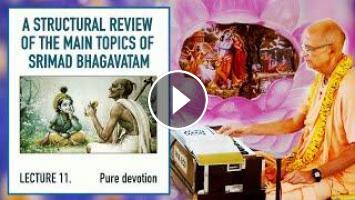
The general design of "Srimad-Bhagavatam" is meant to prepare us to understand the tenth canto, or Krisna-carita properly. But it is not so easy to understand it due to the anarthas in our heart, they create doubts. Srila Sukadeva Gosvami helps us to overcome all these unwanted problems while describing different stories in order to understand the tenth canto.
Sixth canto plays a very special role. It tells the story of Vritrasura, and the purity of his love of Godhead is depicted in a most graphic way. Sixth canto describes a conflict between the mentality of a pure devotee and the mentality of a mixed devotee. The very strong tendency within our heart is to settle for some sort of mixture when it comes to devotion, but "Srimad-Bhagavatam" does not approve it.
Each canto of "Srimad-Bhagavatam" describes a certain clash of psychology, which is the clash within our heart. If we go deep in our heart we will see the same sort of conflict. Sixth canto describes the conflict between Visnudutas and Yamadutas, and one part of us is with Yamadutas and another with Visnudutas because subconsciously we do not have complete faith in pure devotional service. The most important and sad difference between mixed devotee and pure devotee is that mixed devotee will remain here in this world, whereas pure devotee will go back to Godhead.
Sixth canto of "Srimad-Bhagavatam" is posanam or mercy of the Lord, it explains how the Lord is merciful towards pure devotees and mixed devotees, but His mercy manifests differently. Mixed devotion brings about humiliation. The Lord reveals our attachment to the world, therefore we should try to purify our devotion. The Lord protects those who have pure devotion.
ŚB 6.11.22
पुंसां किलैकान्तधियां स्वकानां
या: सम्पदो दिवि भूमौ रसायाम् ।
न राति यद्द्वेष उद्वेग आधि-
र्मद: कलिर्व्यसनं सम्प्रयास: ॥ २२ ॥
puṁsāṁ kilaikānta-dhiyāṁ svakānāṁ
yāḥ sampado divi bhūmau rasāyām
na rāti yad dveṣa udvega ādhir
madaḥ kalir vyasanaṁ samprayāsaḥ
Synonyms
puṁsām — unto persons; kila — certainly; ekānta-dhiyām — who are advanced in spiritual consciousness; svakānām — who are recognized by the Supreme Personality of Godhead as His own; yāḥ — which; sampadaḥ — opulences; divi — in the upper planetary systems; bhūmau — in the middle planetary systems; rasāyām — and in the lower planetary systems; na — not; rāti — bestows; yat — from which; dveṣaḥ — envy; udvegaḥ — anxiety; ādhiḥ — mental agitation; madaḥ — pride; kaliḥ — quarrel; vyasanam — distress due to loss; samprayāsaḥ — great endeavor.
Translation
Persons who fully surrender at the lotus feet of the Supreme Personality of Godhead and always think of His lotus feet are accepted and recognized by the Lord as His own personal assistants or servants. The Lord never bestows upon such servants the brilliant opulences of the upper, lower and middle planetary systems of this material world. When one possesses material opulence in any of these three divisions of the universe, his possessions naturally increase his enmity, anxiety, mental agitation, pride and belligerence. Thus one goes through much endeavor to increase and maintain his possessions, and he suffers great unhappiness when he loses them.
Purport
In Bhagavad-gītā (4.11) the Lord says:
ye yathā māṁ prapadyante
tāṁs tathaiva bhajāmy aham
mama vartmānuvartante
manuṣyāḥ pārtha sarvaśaḥ
“As devotees surrender unto Me, I reward them accordingly. Everyone follows My path in all respects, O son of Pṛthā.” Both Indra and Vṛtrāsura were certainly devotees of the Lord, although Indra took instructions from Viṣṇu to kill Vṛtrāsura. The Lord was actually more favorable to Vṛtrāsura because after being killed by Indra’s thunderbolt, Vṛtrāsura would go back to Godhead, whereas the victorious Indra would rot in this material world. Because both of them were devotees, the Lord awarded them the respective benedictions they wanted. Vṛtrāsura never wanted material possessions, for he knew very well the nature of such possessions. To accumulate material possessions, one must labor very hard, and when he gets them he creates many enemies because this material world is always full of rivalry. If one becomes rich, his friends or relatives are envious. For ekānta-bhaktas, unalloyed devotees, Kṛṣṇa therefore never provides material possessions. A devotee sometimes needs some material possessions for preaching, but the possessions of a preacher are not like those of a karmī. A karmī’s possessions are achieved as a result of karma, but those of a devotee are arranged by the Supreme Personality of Godhead just to facilitate his devotional activities. Because a devotee never uses material possessions for any purpose other than the service of the Lord, the possessions of a devotee are not to be compared to those of a karmī.
The general design of "Srimad-Bhagavatam" is meant to prepare us to understand the tenth canto, or Krisna-carita properly. But it is not so easy to understand it due to the anarthas in our heart, they create doubts. Srila Sukadeva Gosvami helps us to overcome all these unwanted problems while describing different stories in order to understand the tenth canto.
Sixth canto plays a very special role. It tells the story of Vritrasura, and the purity of his love of Godhead is depicted in a most graphic way. Sixth canto describes a conflict between the mentality of a pure devotee and the mentality of a mixed devotee. The very strong tendency within our heart is to settle for some sort of mixture when it comes to devotion, but "Srimad-Bhagavatam" does not approve it.
Each canto of "Srimad-Bhagavatam" describes a certain clash of psychology, which is the clash within our heart. If we go deep in our heart we will see the same sort of conflict. Sixth canto describes the conflict between Visnudutas and Yamadutas, and one part of us is with Yamadutas and another with Visnudutas because subconsciously we do not have complete faith in pure devotional service. The most important and sad difference between mixed devotee and pure devotee is that mixed devotee will remain here in this world, whereas pure devotee will go back to Godhead.
Sixth canto of "Srimad-Bhagavatam" is posanam or mercy of the Lord, it explains how the Lord is merciful towards pure devotees and mixed devotees, but His mercy manifests differently. Mixed devotion brings about humiliation. The Lord reveals our attachment to the world, therefore we should try to purify our devotion. The Lord protects those who have pure devotion.
- Category
- Bondage Challenges
- Tags

Be the first to comment
Up Next
Autoplay
-
1:01:53

His Holiness Bhakti Charu Swami Maharaj's 3rd disappearance day_03.07.2023_Part-1
-
03:20
Strict Femdom - Media Freedom Being Gagged, Coercion Tactics Exposed | Arnab Goswami Debates
-
1:37:17
Lamrim Topics with Geshe Gelek
-
2:28:30
INTENSE Q&A SESSION ON THE TRINITY & OTHER TOPICS!
-
32:34
FEMALE SELF BONDAGE : Day 6: Prahlada Stuti |#SwamiTejomayananda |#Bhakti |#Bhagavatam |#Hindi |#Chi
-
36:16
Day 1: Prahlada Stuti |#SwamiTejomayananda |#Bhakti |#Bhagavatam |#Hindi |#ChinmayaMission|#Devotion
-
54:40
Srimad Bhagavatam I Sri Chanchalapathi Dasa I SB 5.5.29 I 01.03.2024
-
3:53:16
Sensitive Topics in the Rope Community ▶ with @BondageTuition
-
1:25:00
Srimad Bhagavatam Class - HG Arcanabhakti Devi Dasi - 10/31/2023 | Srimad Bhagavatam for ALL
-
1:02:49
Efficacy of Bhakti
-
31:05

Let's play Trixie's Bad Bot Day: (Tickling RPG) - part 1
-
09:16

VERY HOT CHINESE GIRL Hogtied and Tickled with barefoot!!! Chinese Bondage/BDSM/tied up/hogtied
-
03:58

Escape Challenge || Jilbab Diikat (Req Subb)
-
14:26

Shibari You Can Use? Indo Girl Mummification, Breathplay (Bdsm)#5
-
30:03

Chinese Tickle in socks and barefeet
-
07:54

Kink Party Porn... Vanessa Julia 1
-
07:26

hijab girl mummyfied bondage
-
06:31

FENDOM FETISH. Ferry bound01
-
10:37

Girl tied gagged? ferry bound gagged
-
37:10

Indo Girl Mummified Egyptian Style.(Bdsm)#6 Megan Rain Bondage